First Class Printing
First class menu cards featured edges trimmed in 22-karat gold. Even the typefaces were carefully considered. White Star Line favoured clean, unfussy layouts with modern typefaces. This was a deliberate choice at a time when ornate, decorative printing was the norm.
The attention to detail was extraordinary. Everything on paper in first class was produced to the same exacting standard. Menus, stationery, envelopes, wine lists, all of it. It reflected the White Star Line’s philosophy that quality should be present in even the everyday details.
Inside the print shop - the men behind the press
The Titanic’s chief printer was Abraham Mansoor Mishellany, assisted by Ernest Theodore Corbin. They operated out of a printshop believed to be located on D or E Deck, deep in the middle of the ship, where they would have needed space for cases of type, a working area, paper stock, ink, and the press itself.
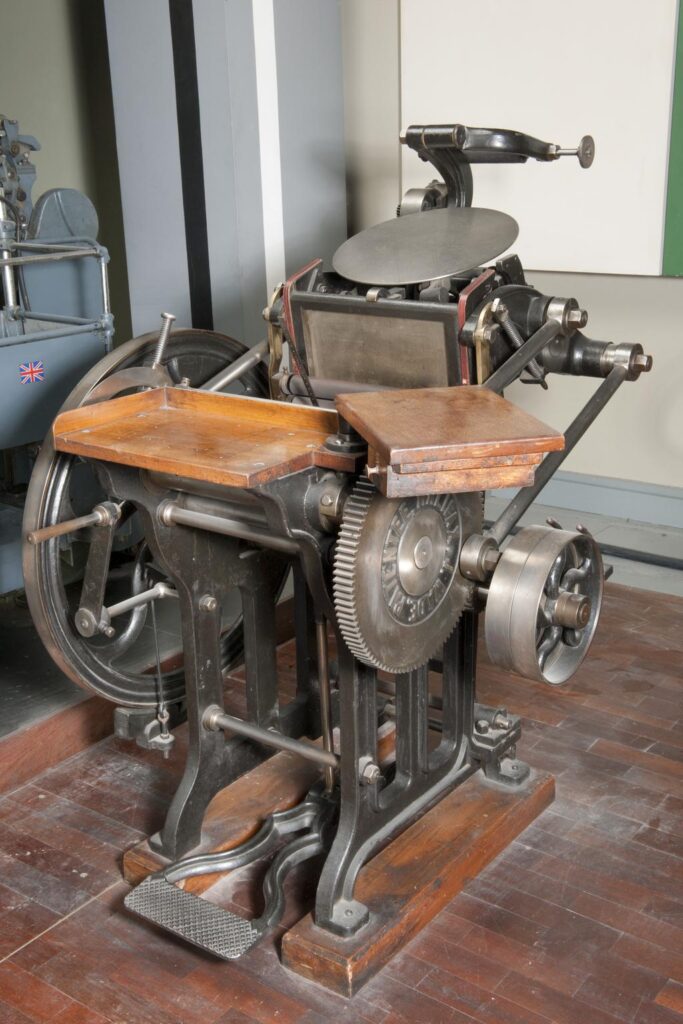
Their tool of trade was an Arab treadle press, a foot-powered letterpress machine common in the late 19th and early 20th centuries. Skilled compositors that they were, a restaurant menu could reportedly be set up in 20 to 30 minutes, with printing taking perhaps another half hour per batch. For a ship the size of Titanic, serving multiple dining classes across every meal, they would have been kept busy.
For their work, Mishellany was paid £1.50 per week and Corbin £1, and they may have supplemented their income by doing private jobbing work for wealthy passengers, printing visiting cards and labels on the side.
The Night the Ship Sank
On the night of April 14, 1912, the printers were almost certainly in their shop, working late. It was the Titanic’s maiden voyage. The crew set many menus from scratch on that first crossing. Breakfast orders for the following morning would have arrived in the afternoon. There is speculation they were also setting Monday’s lunch menus that Sunday evening.
When the Titanic struck the iceberg, no surviving accounts mention the two printers. Both Abraham Mishellany and Ernest Corbin died in the disaster. The White Star Line stopped their wages at the exact moment the ship sank. Their widows received financial assistance from the Titanic Relief Fund.
It’s a small detail within a vast tragedy. But it’s a reminder that the Titanic was a working world unto itself. That included the people setting type in the lower decks.
The Print That Survived
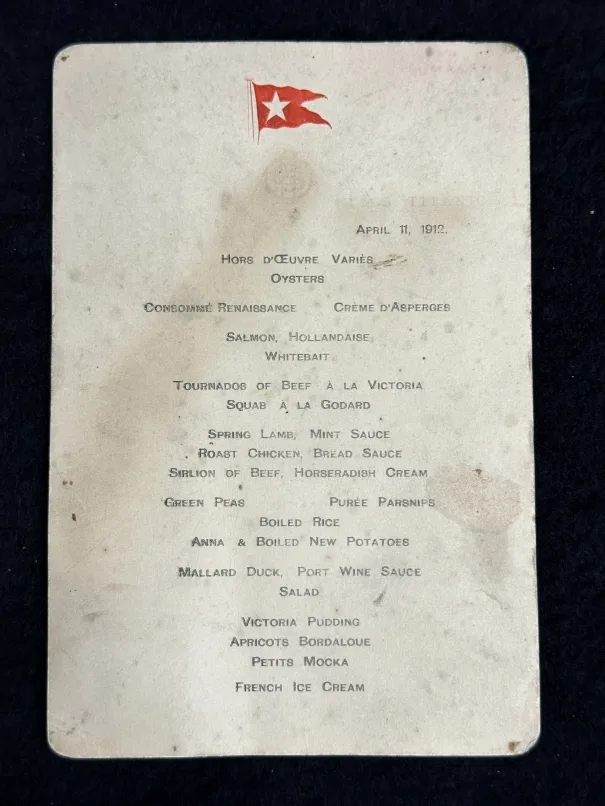
Remarkably, some of the Titanic’s printed materials did survive. Survivors carried some off the ship. Others came from the debris field. A first-class dinner menu from April 11, 1912 sold for over $102,000 at auction in 2023. It was the first dinner of the voyage. Heavily water-stained and missing part of its lettering, it still showed dishes like oysters, sirloin of beef, and Victoria pudding.
First-class passenger Alexander Oskar Holverson wrote a letter to his mother on April 13. It was the day before the ship sank. Rescue workers found the letter folded in his pocket notebook when they recovered his body. He had written it on embossed White Star Line stationery. It is the only known letter on Titanic notepaper to have gone into the North Atlantic and survived. It sold for $166,000 in 2017. A letter from steward Richard Geddes to his wife also survived. He wrote it on original Titanic stationery, and it still had its White Star Line envelope.
No expedition has ever reported finding the print shop itself. The Arab treadle press remains unaccounted for among the more than 5,500 recovered artifacts. The printers left no record of their final hours. The ship took their equipment down with it.
Print Has Always Mattered
Over a century later, the care the White Star Line put into their printed materials tells us something enduring: print communicates quality. The gold-edged menus, the raised thermographic lettering, the clean and considered typefaces, these weren’t accidental. They were deliberate signals of craftsmanship and attention to detail that passengers could hold in their hands.
That same principle applies today. The raised, tactile quality of the Titanic’s thermographic printing is something modern businesses can still achieve, and it makes the same impression it always has. Bond Reproductions offers custom embossing services in Vancouver that add that same depth, elegance, and tactile quality to business cards, letterheads, invitations, stationery, and more. Because some things about great print never change.
FAQs - Luxury Printing
1: What is embossing and how does it work? Embossing is a printing technique that creates a raised, three-dimensional effect on paper or card stock, the same tactile quality found on the Titanic’s first-class printed materials over a century ago. At Bond Reproductions, our custom embossing services use precision techniques to add depth and elegance to business cards, letterheads, invitations, stationery, and more.
2: What is foil printing and what finishes are available? Foil printing applies a metallic or reflective finish to printed materials using heat and pressure, creating a striking, high-end look. At Bond, our custom foiling services are available in a wide range of finishes including gold, silver, gloss solids, and holographics, ideal for business cards, packaging, certificates, and invitations.
3: What types of businesses benefit most from luxury print finishing? Any business that wants to make a strong first impression. Law firms, real estate agencies, luxury hospitality, wedding professionals, and high-end retail are common candidates, but the reality is that embossing and foiling elevate print materials across any industry. If your brand stands for quality, your printed materials should too.
4: Is luxury print finishing worth the investment? Consider that the White Star Line applied gold edges and thermographic raised printing to everyday menu cards, not because they had to, but because those details signalled a standard of quality that passengers noticed and remembered. The same logic applies today. Premium finishing like embossing and foiling turns ordinary print into something people hold onto, talk about, and associate with your brand long after the first impression.
Sources: Titanic Historical Society; Henry Aldridge & Son (auction records); CNN; All That’s Interesting; Encyclopedia Titanica; Soliloquism; Leadfellas Blog (via Titanic Letterpress)