Before there were print shops, there was a missionary in the wilderness melting down tea tins to make what might be Canada’s first printed book.

In 1841, a hymn book was printed in the Cree language using homemade type cast from melted tea tin lids, a fur baler as a press, and birchbark for paper. A fur baler was a heavy tool used to compress animal pelts into bales for shipping. The writing system used was not the English alphabet but a set of unique geometric symbols, each one representing a syllable of spoken Cree. Who deserves credit for creating those symbols is a fascinating and still-debated story. The CBC has a good deep dive if you want to read more: A Question of Legacy: Cree Writing and the Origin of the Syllabics

Printing history in Canada starts in the east

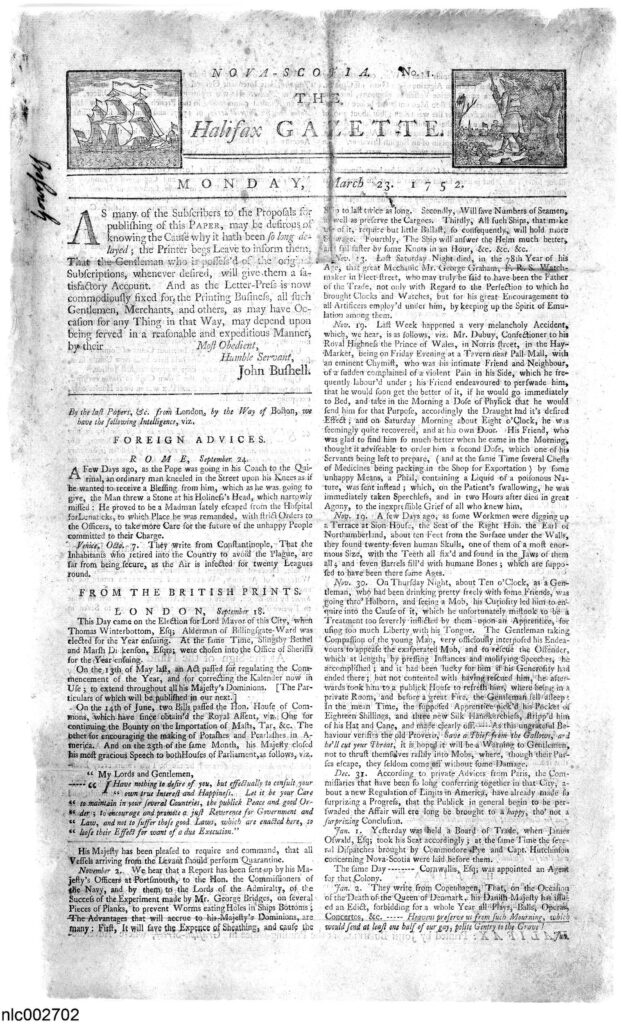
Canada’s printing history goes back to 1751, when Halifax got its first press. A press back then was a large wooden machine with a flat plate that stamped inked type onto paper, one slow page at a time. The following year, the Halifax Gazette became the first Canadian newspaper. After the American Revolution, skilled printers moved north from New England and presses spread quickly across the eastern colonies. Printing was how governments communicated laws, how churches spread their message, and how communities stayed informed.

The Halifax Gazette, the first newspaper printed in Canada. Dated March 23, 1752.

Print heads west

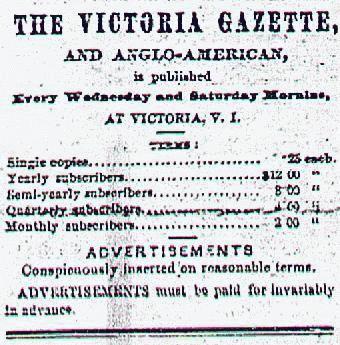
British Columbia got its start in 1858, when the Fraser River gold rush brought a wave of people into the colony and, with them, a printing press. The Victoria Gazette launched on June 25 of that year. It was designed to be small enough to fold and carry easily, since many of its readers were miners moving between camps. It also printed government proclamations, making it both the news source and the official record of the day.

Printing History - THe Victoria Gazette
Printing History - The Victoria Gazette

The gold rush pushed print even further north. By 1898, a man hauling a press and type over a mountain pass stopped at a frozen lake crossing, set up his tent on the ice, and printed a single issue of a newspaper while waiting for the thaw. That paper was the Caribou Sun, published at what is now Carcross, Yukon. It holds the distinction of being the first newspaper ever printed in the territory. (Source: Yukon News)

The technology gets faster

Through the late 1800s, printing history was moving fast. Wooden hand presses gave way to iron ones, which were stronger and faster. Then came cylinder presses. These worked more like a rolling pin than a stamping block, which allowed much faster production. Then the Linotype machine arrived. It let an operator type on a keyboard and automatically cast a full line of metal type at once. This replaced the slow process of setting individual letters by hand.

Canadian inventors contributed too. A Montreal team helped develop the halftone process in 1869. This made it possible to reproduce photographs in print for the first time. Before that, every image in a newspaper or book had to be hand-engraved.

The digital shift

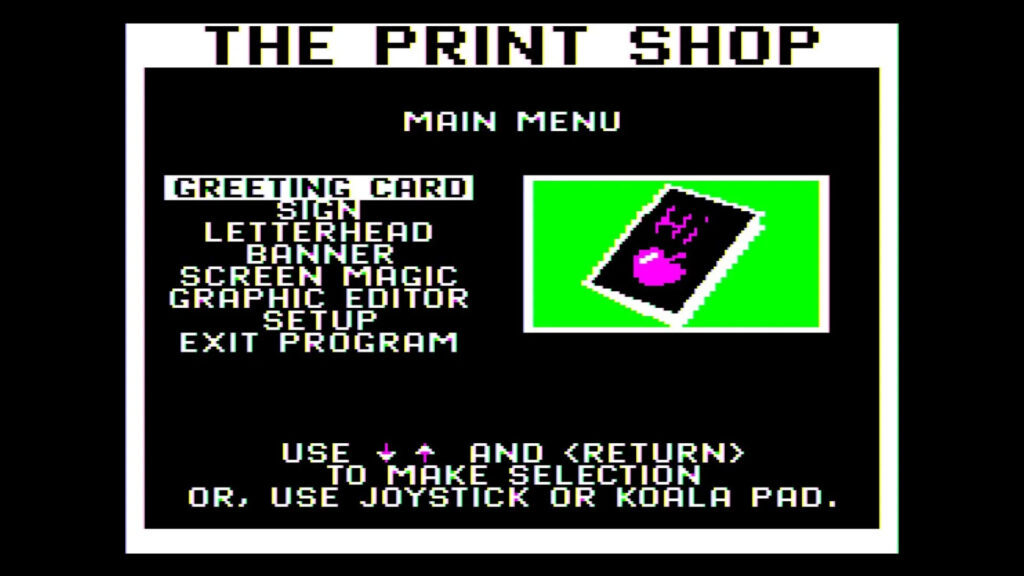
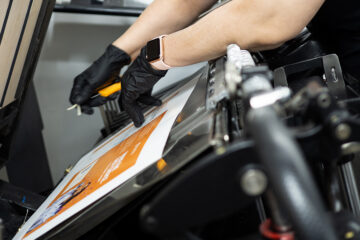
The 20th century brought offset printing. This transferred ink from a metal plate to a rubber roller and then onto paper, giving much cleaner results. Then desktop publishing arrived in the 1980s. A single person with a personal computer could now design and lay out a page that used to require a whole team of specialists.

What once filled a room full of equipment can now be done on a laptop.

Printing History - Desktop Publishing in the 80s copy Screenshot- The Print Shop Club
Desktop Publishing in the 80s. Screenshot- The Print Shop Club

Some things stay the same

The tools have changed completely, but the goal has not. Whether you are pressing type onto birchbark or sending a print-ready PDF to a commercial printer, the point is the same. It is about getting words and images onto a surface that people can hold, read, and keep.

That is still what printing is about. And it is what Bond Reproductions has been doing in Vancouver since 1992. If you want to see what modern printing looks like, explore our services here.

This post draws on sources including The Canadian Encyclopedia, CBC News, the Canadian Typography Archive, and the Yukon News.