From Early Presses to Modern Print: A Brief History of Women in Print
As we celebrate International Women’s Day, it’s worth looking back at an often-overlooked part of printing history: the women who helped support and sustain the early printing industry.
When movable type printing spread across Europe in the late 15th century, printing houses were small workshop businesses rather than large publishing companies. Teams of skilled workers collaborated to produce books, pamphlets, religious texts, and scholarly publications.
In these early print shops, work was often organized around family businesses. Men were usually recognized as the official owners or master printers. Trade rules and social customs typically gave them legal responsibility for operating a workshop, so their names were the ones most often recorded on printed works.
Women, however, were deeply involved in the day-to-day running of these presses. They assisted with production, managed business operations, supervised workers, and helped maintain relationships with customers and institutions. Although their contributions were not always formally credited, their work helped printing houses operate successfully during a time when print was transforming how knowledge and information were shared across Europe.
Over time, some women stepped into leadership roles within established printing businesses. Their work demonstrated that women were not only participants in early printing but also important contributors to the industry’s growth and stability.
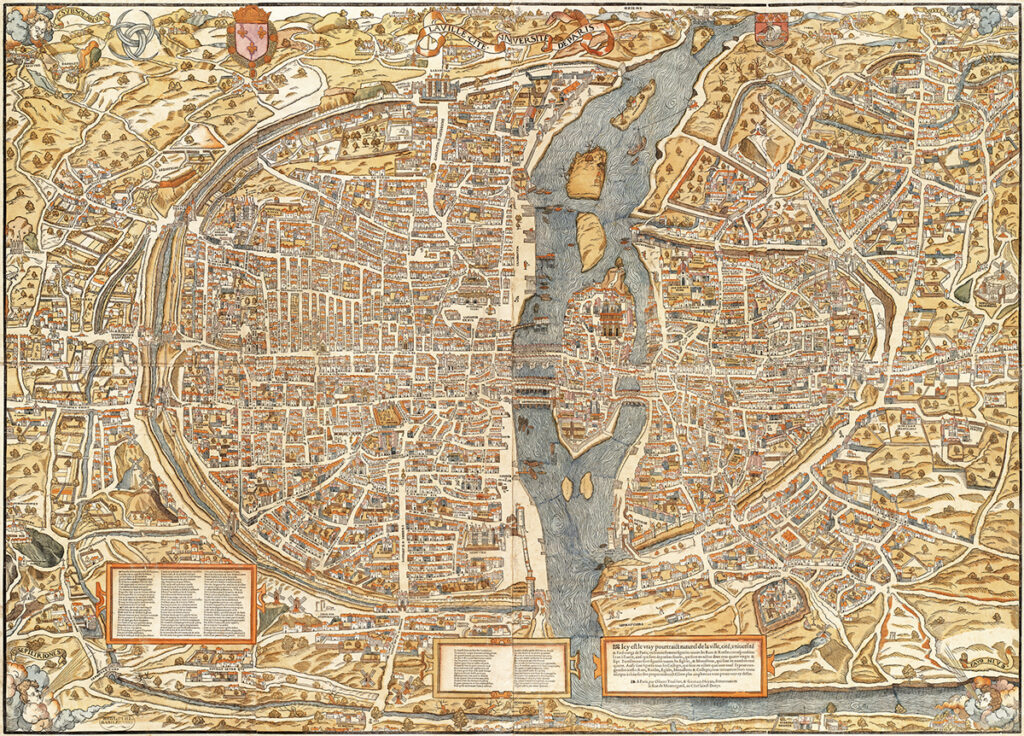
This famous Renaissance map shows Paris roughly as it looked in the mid-1500s, the same era when printers such as Charlotte Guillard and Yolande Bonhomme operated workshops on Rue Saint-Jacques.
Charlotte Guillard – A Leader in Early European Printing
Charlotte Guillard (c. 1480–1557) was one of the most influential printers of the Renaissance and one of the earliest women known to successfully lead a major commercial printing house in Europe.
Based in Paris on Rue Saint-Jacques, the center of the French book trade, Guillard operated the renowned Le Soleil d’Or printing workshop. There, she oversaw the production of hundreds of scholarly, legal, and religious texts used by universities, clergy, and academics across Europe.
Known for her high editorial standards and technical precision, Guillard built a reputation for accuracy and quality. This came at a time when printed books were becoming essential tools for education and knowledge sharing. Her workshop employed numerous craftsmen and operated multiple presses, making it one of the most respected publishing operations in 16th-century Paris.
Guillard’s career demonstrates that women were active participants in the growth of early printing. They contributed not only to production but also to the professionalization and expansion of the publishing industry.
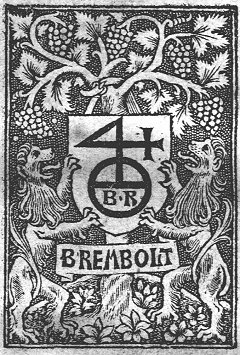
Printer’s device of the Le Soleil d’Or printing house in Paris, used in books produced by the workshop operated by Charlotte Guillard in the 16th century. These woodcut marks functioned as early publisher logos, identifying the printing house responsible for the book.
Yolande Bonhomme – Early Printer of Renaissance Paris
Yolande Bonhomme (c. 1490–1557) was an important figure in the early history of European printing and one of the few documented women actively managing a major print workshop during the Renaissance.
Working in Paris, one of Europe’s leading publishing centres, Bonhomme was closely connected to the city’s established printing trade. She became known for producing religious and devotional texts, particularly Books of Hours. These beautifully printed works were among the most widely owned books of the 16th century and helped expand access to printed material beyond universities and religious institutions.
Through her work, Bonhomme contributed to the growing availability of books during a period when printing was transforming education, literacy, and communication across Europe. Her career reflects the important role women played in sustaining and advancing the early printing industry.
Anne Catherine Hoof Green – Early Printing in North America
Anne Catherine Hoof Green (c. 1720–1775) was an early North American printer and publisher who played an important role in colonial print culture. Based in Annapolis, Maryland, she became the publisher of The Maryland Gazette, one of the American colonies’ leading newspapers.
Under her leadership, the press produced newspapers, government documents, and public notices that helped keep communities informed during a period of political change leading up to the American Revolution. Her work highlights how women were active participants in early printing and publishing across the Atlantic world as print expanded beyond Europe.
Women Who Helped Shape Printing in Canada
Mary Ann Shadd Cary was an important figure in early Canadian publishing and journalism. In 1853, while living in Canada West (now Ontario), she founded and published The Provincial Freeman. She is widely recognized as the first Black woman newspaper publisher in North America and one of the earliest women to edit a newspaper in Canada. Printed in Windsor, Toronto, and Chatham, the paper advocated for education, self-reliance, and civil rights. It also demonstrated how print could inform and connect communities.
As Canada’s newspaper and commercial printing industries expanded in the late nineteenth and early twentieth centuries, women increasingly participated in many areas of print production. They worked as typesetters, proofreaders, bindery workers, editorial assistants, and newspaper staff. In these roles, they contributed to the daily production and distribution of printed information. During both World Wars, women also entered a wider range of industrial and communications roles, helping sustain printing and publishing operations as demand for newspapers, manuals, and public information materials increased.
This tradition of women’s involvement in print continued into the late twentieth century with initiatives such as Press Gang Publishers, a feminist publishing collective founded in Vancouver in 1974. The group operated printing presses, produced books and community publications, and helped train women in technical print and publishing skills. Together, these contributions reflect the important role women have played in shaping Canadian print culture. They supported the production of newspapers, books, and other printed materials that informed and connected communities across the country.
Continuing the Tradition of Print
The history of printing is often remembered through major inventions and technological breakthroughs. Yet the success of the industry has always depended on the skilled people behind the press. They prepared text, operated equipment, and ensured printed materials reached their audiences.
Women were among these early contributors. They helped establish printing as a trusted way to share knowledge, ideas, and stories.
While printing technology has evolved significantly since the Renaissance, the craftsmanship at the heart of quality print remains unchanged. Today, modern techniques such as embossing, foil stamping, die cutting, and other specialty finishing services continue this tradition. These techniques add texture, durability, and visual impact to printed materials. From brochures and packaging to architectural drawings and marketing collateral, these finishing touches help projects stand out. They also carry forward centuries of precision and care. Learn more about how professional print finishing can enhance your next project on our Specialty Finishing services page.
As we reflect on the history of women in print, we’re proud to see that legacy continue here at Bond. Women hold key roles across our company. This includes our CEO, account managers, our all-women art department and the skilled women in production and bindery. Their expertise, attention to detail, and commitment to quality help deliver the standard our clients expect. In many ways, the women at Bond carry forward the same spirit that shaped the early printing industry.
FAQs
What is specialty finishing in printing?
Specialty finishing refers to advanced printing techniques used to enhance the appearance and durability of printed materials. Processes such as embossing, foil stamping, die cutting, lamination, and custom finishes add texture, depth, and visual impact. These techniques are often used for brochures, packaging, presentations, and marketing materials.
Why is specialty finishing important for printed materials?
Specialty finishing helps printed pieces stand out by creating a more professional and memorable final product. Finishing techniques can improve durability while adding tactile and visual elements that elevate branding, making materials more engaging for clients and customers.
What types of projects benefit from specialty print finishing?
Many projects benefit from specialty finishing, including marketing collateral, packaging, presentation folders, architectural drawings, reports, signage, and promotional materials. These finishing techniques help reinforce brand quality and ensure printed materials make a lasting impression. See the full range of options available through our Specialty Finishing Services.
Can specialty finishing improve brand presentation?
Yes. Specialty finishing techniques such as foil accents, embossing, and custom cuts can highlight logos, messaging, and key design elements. These techniques help brands create premium printed experiences. Professional finishing also ensures consistency and quality across printed campaigns.Learn how your brand can benefit by connecting with one of our reps.